


Post-Workout Protein Without the Panic
For years, fitness culture has pushed the same message: if you do a strength workout, you had better get protein into your body within 30 minutes or you are missing your chance.
That idea has been repeated so often that it almost sounds like a law of nature.
But is it really true?
Not exactly.
There is a reason protein gets so much attention after strength training. When you challenge your muscles, your body needs the raw materials to repair and rebuild. Protein helps support that process. So yes, protein matters.
What is less clear-cut is the old “30-minute anabolic window” idea. Research over time has shown that this window is probably much wider than once believed. In other words, your body does not slam shut like a tiny post-workout garage door if you do not drink a shake on the walk to your car. 
That is good news for normal people.
If you eat protein at breakfast, lunch, dinner, or as part of a snack later in the day, you are still supporting muscle repair and maintenance. For most people, the bigger issue is not missing the magical 30-minute mark. It is waiting until dinner to eat most of their protein.
That matters even more as we get older.
Many women, especially in midlife and beyond, do a decent job at dinner but come up short earlier in the day. Toast for breakfast, a light lunch, then a solid protein serving at night is common. The problem is that your muscles do better when they get protein regularly, not all at once.
So if you strength train in the morning and do not eat until lunch, is that ideal? Probably not. But it is also not a disaster.
A more helpful question is this: Am I getting enough protein over the course of the whole day, and am I spreading it out fairly well?
That is where the real opportunity lives.
Think less about chasing the clock and more about building a day that includes protein more than once. That might mean eggs or Greek yogurt at breakfast, chicken or tuna at lunch, a balanced snack in the afternoon, and then your usual dinner protein. It does not have to be fancy, and it does not have to be a shake or supplement.
Which brings us to another question: does the type of protein matter?
In real life, not as much as the internet likes to suggest.
Whole foods work. A protein shake works. Greek yogurt works. Cottage cheese works. Chicken, fish, eggs, tofu, tempeh, edamame, beans, and other protein-containing foods can all help. Some protein sources are a little richer in certain amino acids that are especially helpful for muscle protein synthesis, but for most healthy adults, this is a “fine-tuning” issue, not the main event.
The main event is still this: get enough protein, and do not save all of it for dinner.
So no, you probably do not need to panic and gulp down protein within 30 minutes of your workout. 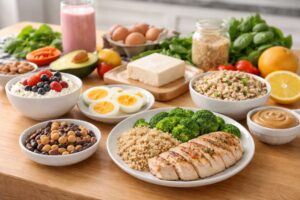
If you like a post-workout meal or shake, great. It can be convenient and helpful. But if your schedule means you eat protein an hour or two later as part of a normal meal, that can still work just fine.
The best protein strategy is not the one with the most hype.
It is the one you can do consistently.
Strength training helps tell your muscles, “Stay strong.” Protein helps give your body the building blocks to follow through. Both matter. But the clock matters less than we once thought.
Join Me for The Spring Energy Reset
On Saturday, March 28 at 9:00 AM Central, I’ll be hosting a free Zoom conversation called The Spring Energy Reset, where we’ll talk about simple ways to help your body adjust to the change in seasons and feel more energized heading into spring.
If you’ve been feeling a little sluggish, off-schedule, or out of rhythm with these back-and-forth Midwest weather shifts, you are not alone. We’ll cover simple Ayurvedic-inspired food ideas, gentle movement, sleep support, and realistic daily habits to help you feel more like yourself again.
You’ll leave with practical ideas you can actually use, without extremes, pressure, or a complicated plan. Save your spot today by sending me an email: carol@inkwellcoaching.com.
Much love,
Health Coach Carol
“Protein, meanwhile, helps you feel fuller longer. It’s also important for strengthening bones and building muscle.” — Maya Vadiveloo